



Why Your Body Struggles in the Heat — And How to Train It to Handle More
Hot weather doesn't just feel uncomfortable. It puts measurable stress on your heart, circulation, and cooling system. Here's what the research says — and how controlled sauna sessions change that.

Summary
Heat is a physiological stressor — and most people's bodies are unprepared for it. This article breaks down five science-backed reasons why sauna use before summer builds real heat tolerance: lower resting heart rate, earlier sweat onset, better plasma volume, reduced perceived exertion, and faster recovery. Backed by peer-reviewed research.
Every summer, millions of people feel it: the sluggishness, the elevated heart rate, the way a simple walk outside leaves you drained. It's not weakness. It's your body doing exactly what it was designed to do — and being overwhelmed by the demand.
Heat is a physiological stressor. When your core temperature rises, your cardiovascular system has to work harder to push blood to the skin for cooling, your sweat glands ramp up, and your heart rate climbs even at rest. For most people, that process is reactive — the body scrambles to keep up.
But here's what the research shows: the body can be trained to handle heat more efficiently. And the most effective way to do that isn't to spend more time outside — it's controlled, repeated heat exposure. That's exactly what a sauna does.
Below, we break down five physiological reasons heat is so hard on the body, what the science says about how sauna use changes each one, and why consistency is the only thing that actually works.
Your Heart Rate Spikes — Even When You're Not Moving
When ambient temperature rises, your body diverts blood flow from your core organs to your skin to dissipate heat. That redistribution forces your heart to pump harder and faster just to maintain normal circulation. In hot weather, your resting heart rate can increase by 10–20 beats per minute — the equivalent of a light jog, just from sitting still.
This is called cardiovascular strain from thermal load. It's why hot days feel exhausting even when you haven't done anything. Your heart is already working overtime before you've taken a single step.

A 2020 study published in Experimental Physiology found that post-exercise sauna bathing over just 10 days significantly reduced resting heart rate during heat stress. Participants who used a sauna after training showed a lower peak heart rate during subsequent heat exposure compared to the control group — meaning their cardiovascular system had adapted to handle the thermal load more efficiently.
Peak Heart Rate Increase During Heat Stress
Peak heart rate increase during heat stress — untrained vs. sauna-adapted individuals (Kirby et al., 2020)
Sources: Kirby et al., Experimental Physiology, 2020 · American Heart Association, Heat and Cardiovascular Health, 2023
Your Sweat Glands Are Undertrained and Slow to Respond
Sweating is your body's primary cooling mechanism. But sweat glands are not static — they respond to training. People who are regularly exposed to heat develop greater sweat gland activity, earlier sweat onset, and higher sweat rates than those who aren't. This is called heat acclimatization, and it's one of the most well-documented adaptations in exercise physiology.
Without regular heat exposure, your sweat glands are essentially undertrained. When a hot day arrives, they're slow to activate, produce less sweat per gland, and your core temperature rises faster as a result. You feel hotter sooner, and your body takes longer to bring temperature back down.
"Repeated sauna use increases the number of active sweat glands and the volume of sweat produced per gland — a direct adaptation that improves the body's ability to cool itself under thermal stress."

In the same 2020 Kirby study, participants who completed a 10-day post-exercise sauna protocol showed significantly greater sweat gland activity during heat stress compared to controls. The sauna group's bodies had learned to cool more aggressively — and more efficiently — than those who only exercised without the added heat stimulus.
Sauna-adapted sweat glands activate earlier and produce more sweat per gland — improving the body's cooling efficiency
Sources: Kirby et al., Experimental Physiology, 2020 · Périard et al., Comprehensive Physiology, 2016
Your Cooling Response Is Reactive, Not Proactive
Most people's bodies cool reactively — they wait until core temperature has already risen significantly before triggering a full cooling response. This lag means your body is always playing catch-up in the heat. You feel hot, your heart is already racing, and your sweat response is just starting to kick in.
Heat-adapted individuals are different. Their thermoregulatory system has been trained to respond earlier, faster, and more efficiently. They begin sweating at a lower core temperature, their blood vessels dilate sooner, and their cardiovascular system doesn't have to work as hard to maintain thermal balance.

A 2016 review in Comprehensive Physiology by Périard and colleagues documented that heat acclimation — achievable through repeated sauna use — produces a lower core temperature threshold for sweating onset, meaning the body starts cooling before it's already overheated. This single adaptation dramatically reduces the perceived difficulty of hot conditions.
Sources: Périard et al., Comprehensive Physiology, 2016 · Kirby et al., Experimental Physiology, 2020
Heat Stress Compounds — Every Hot Day Adds to the Load
One of the most underappreciated aspects of summer heat is that the stress compounds over time. A single hot day is manageable. But consecutive days of elevated ambient temperature — combined with disrupted sleep, reduced hydration, and elevated baseline heart rate — create a cumulative physiological burden that most people don't account for.
This is why people often feel worse in week two of a heat wave than week one, even if the temperatures are the same. The body hasn't recovered between exposures. Cardiovascular strain accumulates, sleep quality degrades, and the body's ability to thermoregulate becomes progressively less efficient.

The antidote is building heat tolerance before the demand arrives. Controlled sauna sessions — where you choose the temperature, duration, and timing — allow your body to adapt progressively without the compounding stress of real-world heat exposure. You're essentially giving your body a rehearsal, so the actual performance isn't a shock.
"A controlled sauna gives you something the summer can't: predictability. Your body learns to handle heat on your terms — not when it's already overwhelmed."
Sources: WHO, Heat and Health Report, 2023 · Flouris et al., Journal of Applied Physiology, 2018
Most People Wait Until They're Already Struggling
The biggest mistake people make with heat is treating it reactively. They don't think about heat tolerance until they're already in the middle of a heat wave, already feeling drained, already behind on hydration. At that point, adaptation is no longer possible — you're just managing symptoms.
Heat adaptation requires consistent, repeated exposure over 7–14 days to produce meaningful physiological change. That means starting before the heat arrives, not after. And it means doing it regularly enough that the adaptations are maintained — not just a one-time effort.

A simple, consistent sauna routine — even 3–4 sessions per week at manageable temperatures — is enough to trigger and maintain the key adaptations: lower resting heart rate during heat stress, earlier sweat onset, greater sweat gland activity, and a more effective cooling response. The body doesn't need extreme heat. It needs consistent heat.
Consistency matters more than intensity — 3–4 sessions per week at manageable temperatures produces measurable adaptation within 2 weeks
Sources: Périard et al., Comprehensive Physiology, 2016 · Casa et al., Journal of Athletic Training, 2012
Build your heat tolerance before summer demands it.
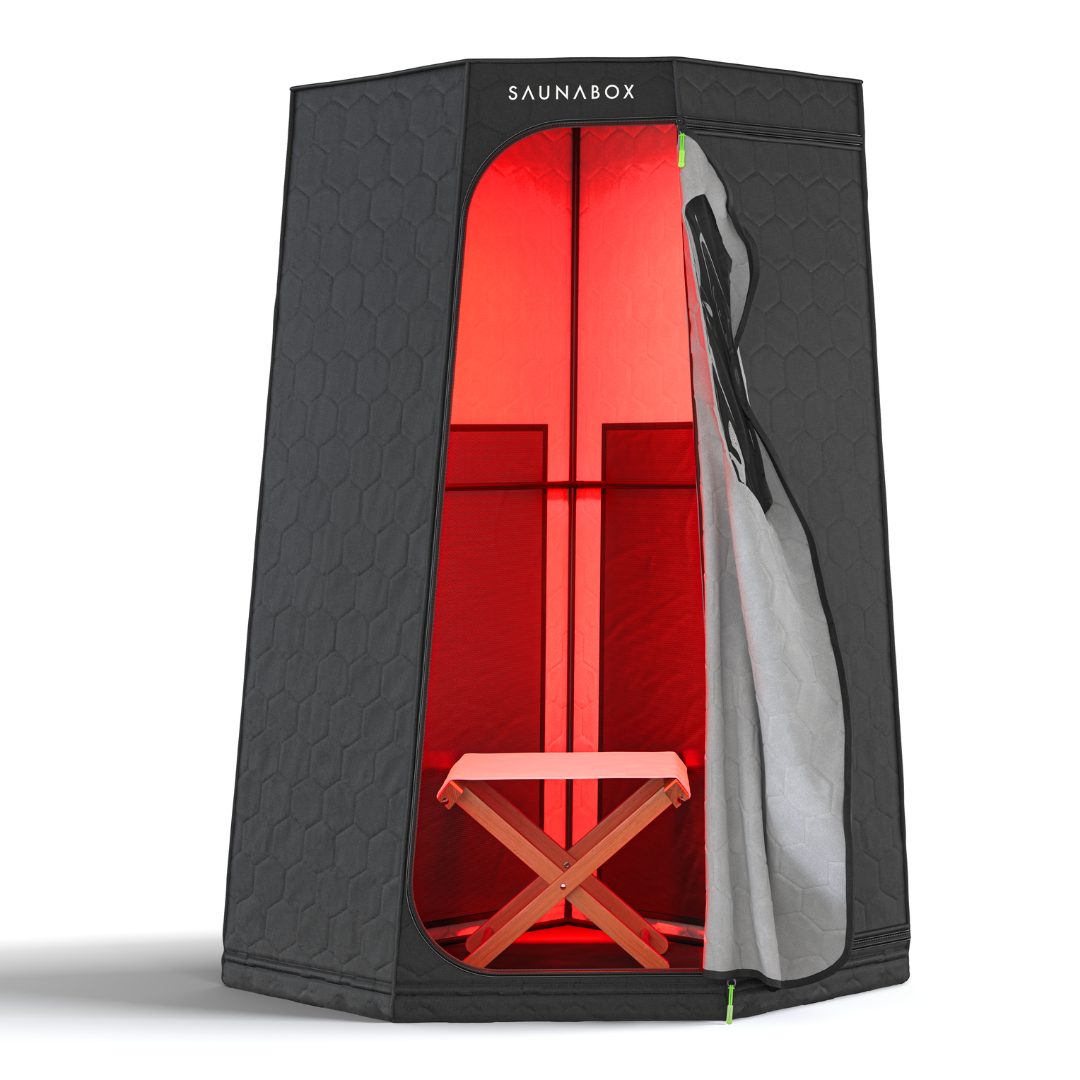
SaunaBox makes controlled heat exposure easy to build into your routine at home — no gym, no commute, no waiting.
Shop SaunaBoxFree shipping to mainland USA · Patent pending design & technology
How the body adapts to heat — and why therapy matters during summer
You don't need extreme conditions to build heat tolerance. You need consistency. A controlled sauna session gives your body a predictable thermal stimulus — one it can adapt to, recover from, and build on. Here's how to structure it.
Controlled Exposure
Start with a short session at a manageable temperature — 150–160°F for 10–15 minutes. The goal is steady exposure your body can respond to and recover from, not an extreme session.
Hydrate + Cool Down
Drink water before and after. Once the session ends, give your body time to cool down and let your heart rate return to normal. Don't rush back into activity.
Repeat Consistently
Heat adaptation comes from consistency. Repeat the routine a few times per week, gradually increasing session length as your tolerance improves. Aim for 7–14 days to see measurable change.
Track Your Response
Monitor your resting heart rate and how you feel in the heat day-to-day. Most people notice a meaningful difference within two weeks — lower perceived exertion, less fatigue, better recovery.
What repeated heat exposure can change
In a three-week study of trained runners, post-exercise sauna bathing was linked to measurable improvements across three key markers of heat tolerance and cardiovascular efficiency.
Lower Peak Heart Rate
Participants showed a significantly lower peak heart rate during heat stress after the sauna protocol — meaning the cardiovascular system worked less hard under the same thermal load.
Greater Sweat Gland Activity
The sauna group showed increased sweat gland activation and higher sweat output per gland — a direct marker of improved thermoregulatory capacity.
More Effective Cooling Response
The body began cooling earlier — at a lower core temperature threshold — meaning the heat response was proactive rather than reactive, reducing the overall strain of hot conditions.
Build a controlled heat routine at home.


Got Questions?
Text a product specialist.
Real answers in under an hour — no bots, no scripts.